SASSA Disability Grant 2026: Amount, Requirements & How to Apply
Published 01 November 2026
SASSA Disability Grant 2026: Amount, Requirements and How to Apply

The disability grant is the monthly grant SASSA pays to adults whose physical or mental disability makes them unfit to work. In short: if you are between 18 and 59 years old, live in South Africa, and a doctor appointed by the state confirms your disability makes you unfit to work for longer than six months, you can apply. The maximum amount is R2 400 per month. Applying is free, and if approved, you are paid from the day you applied. This guide covers how much it pays in 2026, who qualifies, the medical assessment, the means test, the documents you need, and how to apply.
How Much Is the Disability Grant in 2026?
The disability grant pays a maximum of R2 400 per month — the amount published on the official gov.za service page for this grant.
The word "maximum" matters. The grant is means tested, so if you have other income, the amount you actually receive can be lower than the maximum — SASSA works this out from the income and assets you declare when you apply. Grant amounts are increased from time to time by government announcement, so confirm the latest amount on official SASSA channels before relying on this figure.
Extra help if you need full-time care: If you receive the disability grant and need regular attendance by another person to manage daily activities because of your disability, you may also qualify for a grant-in-aid on top of your grant. It cannot be paid on its own — if the main grant lapses, the grant-in-aid lapses too. Ask about it at a SASSA office.
Who Qualifies?
You can apply if:
- You are between 18 and 59 years old.
- You are a South African citizen, permanent resident or refugee, and you are living in South Africa at the time of application.
- You undergo a medical examination where a doctor appointed by the state assesses the degree of your disability.
- You are not cared for in a state institution.
- You do not receive any other social grant for yourself.
- You and your spouse (if you are married) pass the means test — your income and assets must be below the limits explained further down.
Two age notes. If you are 60 or older, the grant meant for you is the older persons grant, which has its own guide on this site. And if a person under 18 needs permanent care because of a disability, their caregiver can apply for a care dependency grant instead.
Temporary and Permanent Disability Grants
The disability grant is not one single thing — the medical assessment decides which of the two kinds you get:
- You get a temporary disability grant if your disability will last for a continuous period of not less than six months and not more than 12 months.
- You get a permanent disability grant if your disability will continue for more than a year.
Do not let the word "permanent" mislead you. A permanent disability grant does not mean you will receive the grant for life — it means the grant continues for longer than 12 months, and it can still be reviewed. The starting point for both kinds is the same: your disability must make you unfit to work for longer than six months before this grant applies at all.
The Means Test Explained
The means test is SASSA's check of what you earn and what you own. If you are married, you and your spouse are assessed together. The limits published on the official gov.za page are:
- Income: not more than R112 200 per year (about R9 350 per month) if you are single, or R224 400 per year (about R18 700 per month) combined if you are married.
- Assets: not more than R1 584 000 if you are single, or R3 168 000 if you are married.
When you apply, SASSA looks at the full picture you declare: your income and any dividends, your assets including the municipal value of property you own, and any private pension. That is why the application asks for bank statements and proof of income and assets (see the documents list below) — the means test is worked out from those papers, not from a single payslip.
Two practical points. First, these limits are reviewed from time to time, so if you were turned away in a previous year, check the current limits before assuming you still do not qualify. Second, if your income is close to the limit, apply anyway and let SASSA calculate — a small amount of other income does not automatically mean you get nothing, because the full R2 400 is a maximum, not an all-or-nothing amount.
Not sure whether your own income and assets fall inside these limits? Run your numbers in our SASSA Means Test Checker - it uses the same 2026/27 thresholds explained above.
The Medical Assessment
The medical assessment is the heart of a disability grant application, and it works differently from what many people expect. It is not your own doctor who decides — a doctor appointed by the state assesses the degree of your disability.
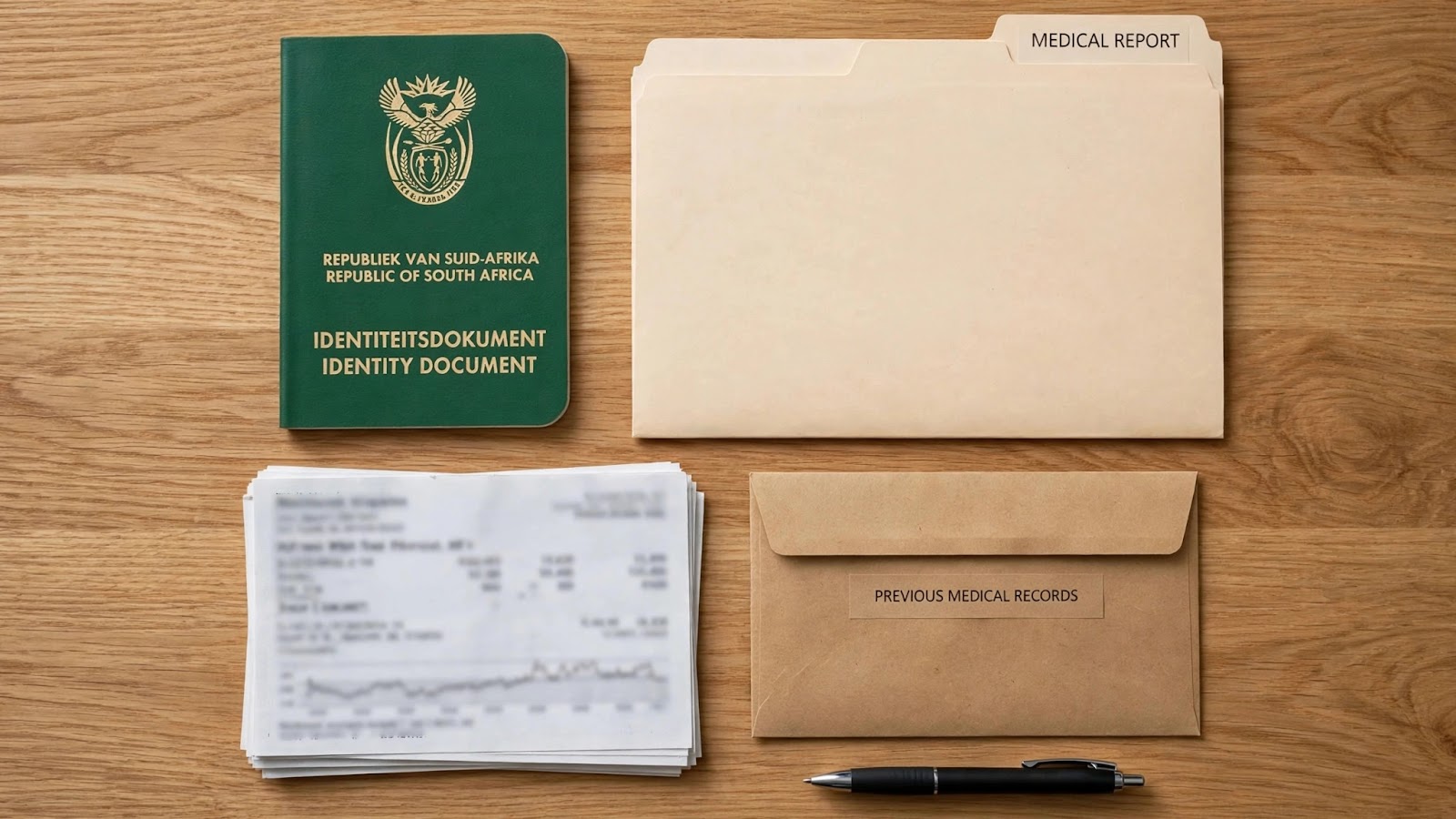
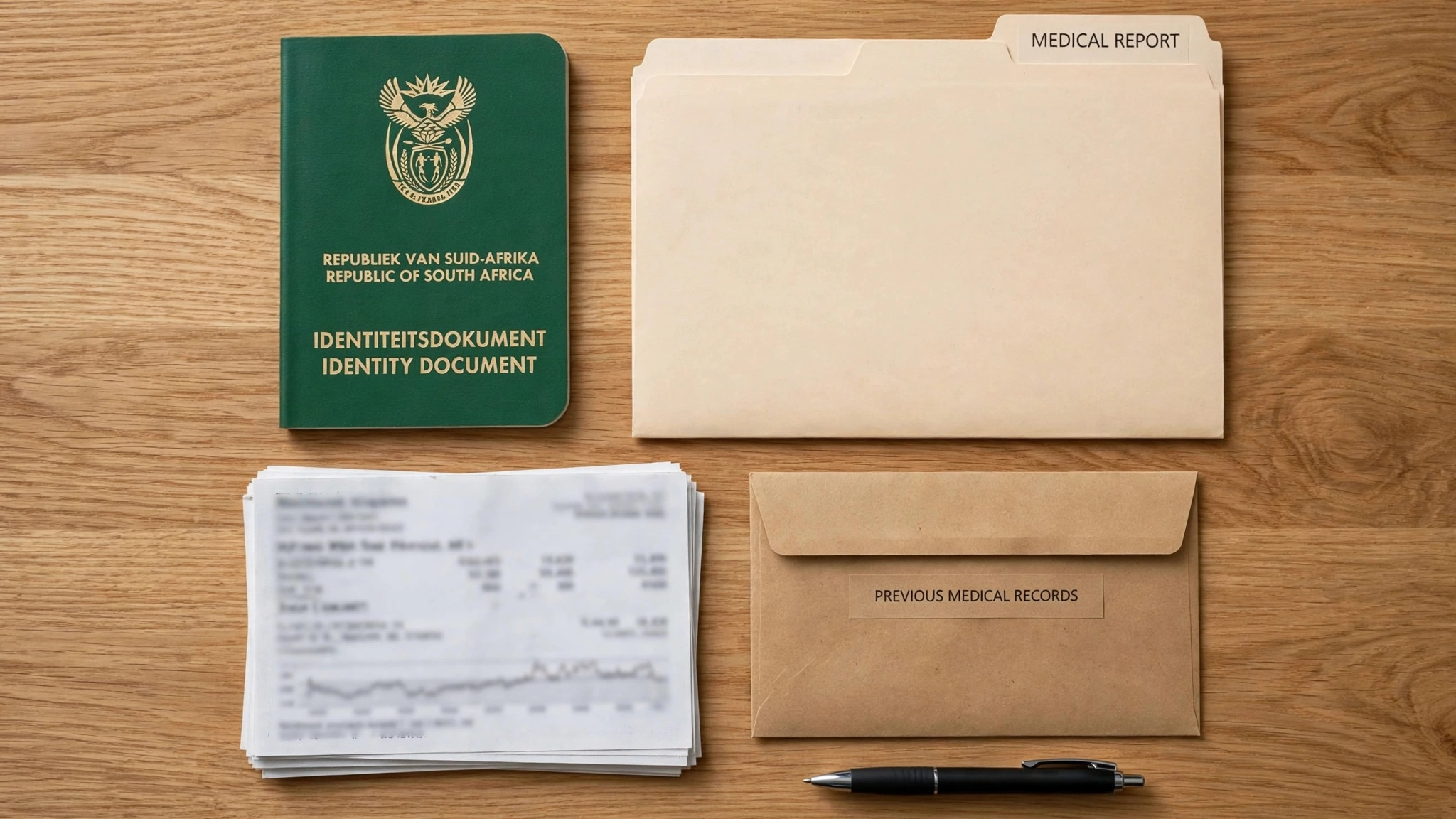
Bring along any previous medical records and reports when you apply and when the assessment is done — they show the history of your condition. The doctor completes a medical report and forwards it to SASSA.
Timing matters: the report is valid for three months from the date you are assessed, and the official SASSA portal states that your medical assessment must not be older than three months at the date of application. If too much time passes in between, the report goes stale and holds everything up — treat the application and the assessment as one process, not two errands months apart.
Documents You Need
Take the following to the SASSA office when you apply:
- Your 13-digit bar-coded identity document (ID).
- A medical report and functional assessment report confirming your disability.
- Proof of your marital status (if applicable).
- Proof of residence.
- Proof of your income and/or dividends (if any).
- Proof of your assets, including the municipal value of the property you own.
- Proof of your private pension (if any).
- Your bank statements of the previous three months.
- If you are a refugee, your refugee status permit and 13-digit refugee ID.
- If you were employed, your UIF document (the "blue book") or a discharge certificate from your previous employer.
- If your spouse died within the last five years, a copy of the will and the first and final liquidation and distribution accounts, where applicable.
If you do not have an ID: complete an affidavit on the standard SASSA format in the presence of a Commissioner of Oaths who is not a SASSA official, and bring a sworn statement signed by a reputable person — such as a councillor, traditional leader, social worker, minister of religion or school principal — who can verify your name and age. The SASSA official will take your fingerprints and refer you to the Department of Home Affairs to apply for an ID while your application is processed. Show proof of having applied for the ID — and if you have not applied yet, you must do so within three months of applying for the grant. If you do not get the ID, your grant will be suspended.
How to Apply Step by Step
The disability grant application is made in person at a SASSA office. Application forms are not available online — you get the form at the office. The process works like this:
- Go to the SASSA office nearest to where you live, with all the documents listed above, including your previous medical records.
- Complete the disability grant application form in the presence of the SASSA officer.
- Undergo the medical examination. The state-appointed doctor assesses the degree of your disability and forwards the medical report to SASSA — remember, it is valid for three months.
- Keep the receipt you are given — it is your proof that you applied.
- Wait for the outcome. It may take up to three months to process your application.
- If approved, you will be paid from the day you applied — so the months spent waiting are not lost money.
The service is free. Nobody — no agent, no middleman, no website — may charge you a fee to apply. If someone asks for payment, walk away and go directly to a SASSA office.
How and When You Will Be Paid
SASSA pays the grant through one of the following methods:
- Cash at a specific pay point on a particular day.
- Electronic deposit into your bank account, including Postbank. (Your bank may charge you for the service.)
- An institution not funded by the State, such as a home for people with disabilities.
As for dates: SASSA pays the grants in a set order each month — older persons grants first, then disability grants, then children's grants. SASSA announces the exact dates for each month through its official channels ahead of time — check the official announcement or our SASSA payment dates guide rather than relying on last month's dates, because they shift slightly each month. There is no need to rush to withdraw on the first day — money in your account stays there until you use it.
 |
Reviews, Suspension and When the Grant Lapses
Your grant is not necessarily final forever — SASSA can decide that it must be reviewed.
Your grant may be suspended if:
- Your circumstances change.
- A review outcome goes against you.
- You fail to co-operate when your grant is reviewed.
- You commit fraud or misrepresent yourself.
- There was a mistake when your grant was approved.
Your grant will lapse when you pass away, are admitted to a state institution, do not claim for three consecutive months, or are absent from the country. One special rule catches many families out: if you are admitted to an institution that has a contract with the state to care for you, your grant is reduced to 25% of the maximum amount from the fourth month after admission, and reinstated immediately when you are discharged.
Why Applications Are Declined — and How to Appeal
Most unsuccessful applications fail on the basic rules above. The common reasons are:
- Medical assessment: the state-appointed doctor's report does not confirm a disability that makes you unfit to work for longer than six months.
- Means test: your (and your spouse's) income or assets are above the limits.
- Another grant: you already receive a social grant for yourself.
- State institution: you are cared for in a state institution.
- Age or status: you are under 18 or 60 or older, or cannot show you are a citizen, permanent resident or refugee living in South Africa.
- Missing or outdated documents: no ID, no bank statements, or a medical report already older than three months.
If your application is not approved, the social security office will inform you in writing and state the reasons. Read that letter carefully — it tells you exactly which rule you failed, and sometimes the problem is a fixable document issue. Also read our guide on why SASSA grants are declined and how to fix it.
If you disagree, you can appeal to the Minister of Social Development in writing, explaining why. The appeal must be lodged within 90 days of receiving the notification — do not let that deadline pass.
Frequently Asked Questions
1. How much is the disability grant per month in 2026?
The maximum is R2 400 per month, according to the official gov.za service page. Because the grant is means tested, your actual amount can be lower if you have other income.
2. What is the difference between a temporary and a permanent disability grant?
A temporary grant is paid when your disability will last for a continuous period of not less than six months and not more than 12 months. A permanent grant is paid when your disability will continue for more than a year — but "permanent" does not mean for life, and the grant can still be reviewed.
3. Who decides whether my disability qualifies?
A doctor appointed by the state. The doctor assesses the degree of your disability, completes a medical report and forwards it to SASSA. The report is valid for three months from the date you are assessed, so do not let it expire before your application is in. Bring your previous medical records to both the application and the assessment.
4. Can I apply if I am under 18 or 60 or older?
No — the disability grant covers ages 18 to 59. If you are 60 or older, apply for the older persons grant instead. If a person under 18 needs permanent care because of a disability, their primary caregiver can apply for a care dependency grant.
5. Can I still qualify if I have some income?
Possibly, yes. The means test allows income of up to R112 200 per year if you are single or R224 400 per year if you are married (combined), and assets up to R1 584 000 (single) or R3 168 000 (married). Your grant may be less than the maximum, but some income does not automatically disqualify you.
6. How long does it take, and from when am I paid?
Processing may take up to three months. If your grant is approved, you are paid from the day on which you applied, so keep your application receipt as proof.
7. My application was declined. What can I do?
SASSA will tell you in writing why. If you disagree, appeal to the Minister of Social Development in writing within 90 days of the notification. If the reason is missing documents or an expired medical report, fix that first and return to the SASSA office.
Conclusion
The disability grant — a maximum of R2 400 a month — supports South Africans aged 18 to 59 whose disability makes them unfit to work for longer than six months. Apply in person at your nearest SASSA office with your ID, three months of bank statements, proof of income, assets and residence, and your medical records; complete the state medical assessment while your report is still fresh; keep your receipt; and check official SASSA channels for the exact payment dates each month.
Disclaimer: Payment dates and amounts change — always confirm on the official site sassa.gov.za.